Navigating the Tensions: Prediction Markets Between State Oversight and Federal Regulation
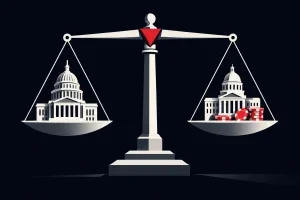
The tension surrounding prediction markets is intensifying as platforms like Kalshi and Polymarket push back against state regulations. They've thrown their weight behind lobbying efforts, amassing millions to influence the political landscape. In the first half of 2026 alone, over $3 million got spent in a bid to establish who holds authority over these markets. On one side, platforms advocate for federal regulation, while states strive to maintain their grip through existing gambling laws. The stakes here are high — not just for market operators but also for how future regulations could shape the wider gambling industry.
Kalshi’s Aggressive Lobbying Strategy
Kalshi's political contributions are striking, with totals that catch the eye of political watchers. Early in 2026, $147,500 went to the Republican Attorneys General Association, while the Democratic Attorneys General Association received $170,000. That’s not all; Kalshi also donated $100,000 to the Republican Governors Association and matched that with $150,000 to its Democratic counterpart. This dual-party strategy underscores a calculated approach to gaining influence across the political spectrum.
With an aggressive plan, Kalshi established a lobbying presence in 41 states by September 2026, onboarding nearly all its lobbyists after April. Their spending in significant markets like California tipped around $62,000, but projections suggest they'll exceed $400,000 in New York by mid-2027. Notably, Kalshi's federal lobbying efforts hover close to $1 million, leveraging extensive financial backing to secure political allies in a polarized environment. The ambition here is clear — they’re not just participating; they aim to reshape the conversation about regulatory oversight.
The clash between state and federal interests reflects the explosive growth in prediction markets recently. Kalshi and its peers frame their operations as swaps eligible for CFTC regulation. This characterization runs counter to how state officials perceive these markets, viewing them as akin to traditional gambling venues. The resulting rift has seen 44 state attorneys general come together, urging the CFTC to acknowledge state laws while simultaneously denouncing prediction markets. They've positioned themselves as guardians of existing regulations, likening these platforms to casinos — a comparison that carries significant legal ramifications.
This tug-of-war is far from straightforward. As lawsuits navigate the federal court system, contradictory rulings complicate matters. Kalshi’s bipartisan financial strategies have raised eyebrows, particularly because many challengers include the very state attorneys general they’re funding. Representatives, like Oregon's Dan Rayfield and Vermont's Charity Clark, assert that political contributions do not sway their judgments. Is that credible? You have to wonder how easy it is to separate money from influence in such high-stakes scenarios.
Formation of the Coalition for Prediction Markets
The scrutiny of this emerging market sector is multifaceted. In December 2025, Kalshi banded together with major players like Robinhood and Coinbase to form the Coalition for Prediction Markets, although Polymarket notably opted out. This coalition's financial commitment is visible, with a $100,000 contribution toward federal lobbying and an additional $50,000 earmarked for lobbying efforts in California by mid-2026. It speaks volumes about the importance of collective action in navigating treacherous regulatory waters, even if not all significant players are on board.
A Critical Legal Threshold Awaits
The heavy lobbying efforts seem concentrated in California and New York, areas considered pivotal because of their regulatory environments. Outcomes from ongoing litigation could significantly alter how these markets are perceived and governed. Will states tighten their grip? Or will the federal framework find a way to integrate these platforms in a manner that acknowledges their unique position? Currently, there are no Supreme Court petitions or hearings on the horizon, leaving a critical gap in understanding. This legal uncertainty adds another layer of complexity; how will companies adapt to the possible outcomes?
If you're working in this space, it's vital to keep a close eye on these developments. Understanding the regulatory tug-of-war is essential for companies aiming to navigate the intersection of state control and federal oversight. The implications here could shape not just the future of prediction markets but the broader context in which all gambling-related platforms operate.
The post Navigating the Tensions: Prediction Markets Between State Oversight and Federal Regulation appeared first on ReadWrite.