Stock Prediction Markets Accelerate Growth Amid Regulatory Concerns
Polymarket International and Kalshi are significantly expanding their event-driven contract offerings, focusing on stock-linked wagers. By early September, Polymarket traders had poured over $220 million into about 31,000 markets tied to stock performance, a surge that has caught the eye of securities lawyers who caution about investor protection in this fast-evolving space. This rapid expansion underscores a larger trend where prediction markets increasingly intertwine with traditional financial mechanisms, sparking debate about their implications for regulatory frameworks.
Leading Stocks: Nvidia, Apple, and Tesla
Since launching individual-stock contracts in October 2022, nearly 60% of Polymarket's total wagers have targeted specific stock price movements. This pivot towards stock-focused bets starkly highlights a growing appetite for speculative trading within the financial landscape. Research from Allium for Reuters indicates that popular stocks such as Nvidia, Alphabet, Apple, and Tesla dominate individual bets, while the rest is distributed among ETFs and broader stock indices. Traders can place bets on yes or no outcomes regarding whether a stock or index hits a predetermined price by a specific date. This method blurs the lines between traditional investing and gambling, raising questions about investor motivations and the sustainability of such practices.
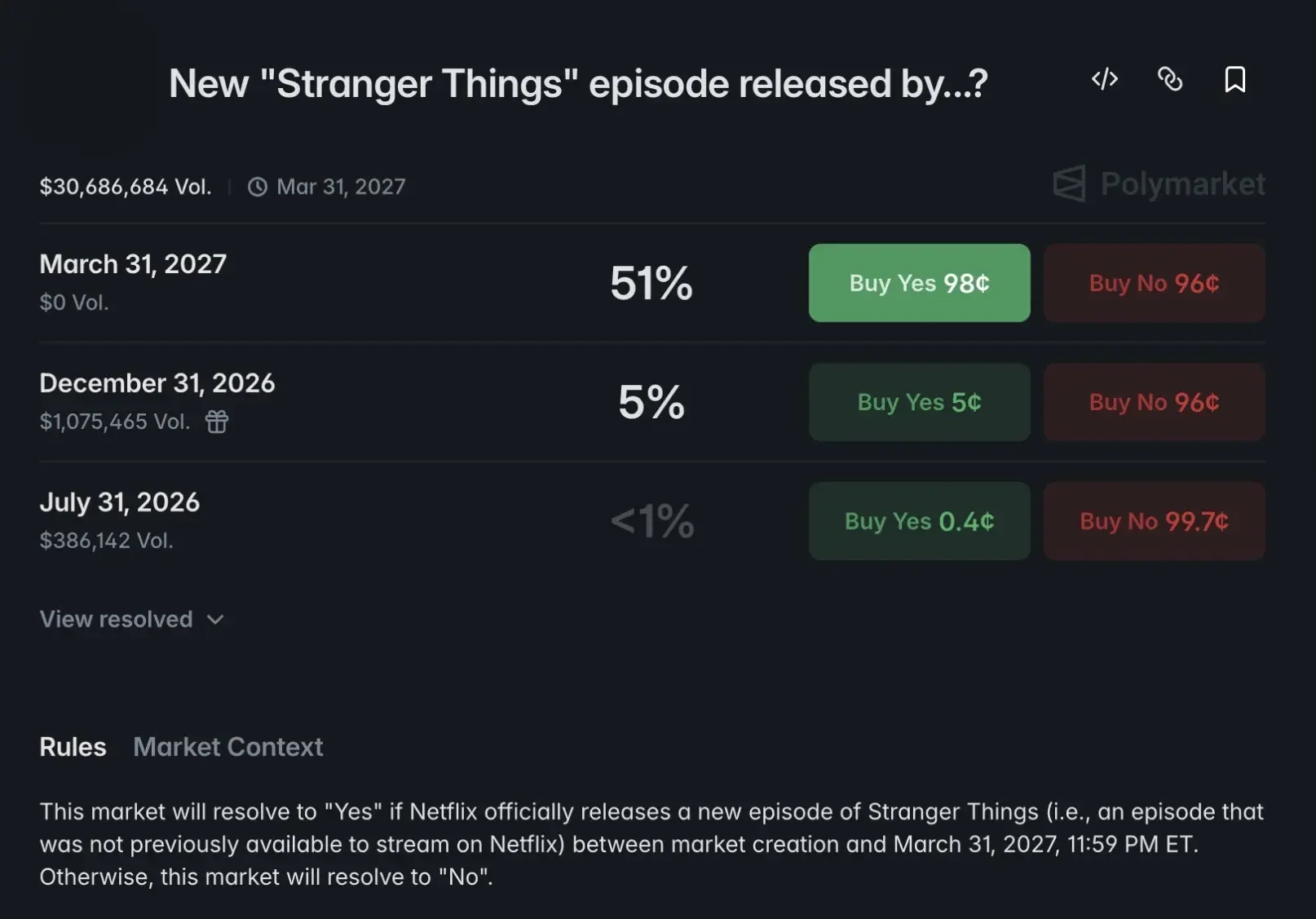
One wallet analyzed by Allium executed around 1,300 trades focused solely on Apple contracts, resulting in a volume of $175,000. This level of activity suggests a distinct market enthusiasm for Apple, with trades structured for profit regardless of market movements—indicative of a strategic, if not speculative, approach. Kalshi, on the other hand, does not offer individual stock contracts; it operates around 2,500 markets daily linked to broader indices and corporate metrics. This includes contracts forecasting new iPhone launches and tracking Tesla's delivery numbers, catering to a diverse range of traders interested in more predictable outcomes rather than the volatility individual stock contracts can entail. This distinction between the two platforms might attract different types of investors depending on their risk tolerance.
Regulatory Gaps Highlighted by Experts
U.S. regulations generally categorize contracts associated with a single company's stock as security-based swaps, which are overseen by the SEC and predominantly available only to professional investors. Yesha Yadav, an associate dean at Vanderbilt University Law School, mentions that the current trajectory represents a fresh evolution in market structure, where innovation outpaces regulatory measures. The existing regulatory framework struggles to keep up with the rapid proliferation of these event-driven contracts, which can operate in ways that traditional securities do not.

James Angel, a finance professor at Georgetown University, emphasizes that Polymarket's offshore legal model complicates U.S. regulatory oversight. This raises alarms for regulators who may find it increasingly difficult to monitor and manage activities that slip through existing regulatory nets. Former SEC official Ben Schiffrin, who now oversees securities policy at Better Markets, echoes these sentiments, emphasizing that insider trading is a risk in these environments just as much as with traditional stocks. The demand for stricter regulation of prediction markets continues to grow, particularly as the CFTC claims jurisdiction over these contracts as derivatives. And yet, the SEC and CFTC have jointly sought public feedback regarding their regulatory responsibilities, illustrating a lack of consensus on how these markets should be governed.
Diverging Paths of Polymarket
Polymarket International has established itself as an offshore entity offering individual stock contracts, while its U.S. counterpart is regulated by the CFTC and does not include such bets, focusing instead on corporate metric markets. This divergence highlights a strategic decision that could appeal to both types of investors—those wanting the thrill of high-stakes individual stock betting and those preferring the relative safety of broader market indicators. Both platforms, including Kalshi, express their commitment to preventing misconduct and have mechanisms in place to report issues to U.S. regulators. A Polymarket representative stated that maintaining market integrity is crucial and they actively work to limit access for U.S. users to the offshore site. However, this raises questions: are these measures sufficient in a landscape that grows ever more complex?
As the platforms cater to both institutional investors and individual traders, they position event contracts as continuous hedging instruments. This shift could encourage more individuals to engage with the market, but it also fuels the ongoing increase in leveraged trading across stock, commodity, and prediction markets, raising serious questions about pricing stability and regulatory oversight. Nvidia, Alphabet, Apple, and Tesla did not provide comments regarding these developments, leaving an air of uncertainty about how key market players view the rise of these trading opportunities.
Implications and Future Outlook
This shift towards stock-linked predictions fundamentally alters how both casual and institutional investors engage with the market. Increasingly, players might look to these prediction markets as viable alternatives or complements to traditional investment strategies. However, this new environment begs the question: how will regulators respond to a market that functions both as a speculative platform and an investment tool? If you're working in this space, it's essential to keep an eye on the evolving legal landscape. Adapting to this shifting regulatory framework may soon be necessary as investor protections become a paramount concern for those monitoring the rapid influx of capital and enthusiasm in prediction markets.
In this atmosphere of uncertainty, one thing seems clear: unless regulatory bodies can catch up with the fast-paced developments, there's a potential risk for market integrity and investor safety. The growing interest in these platforms might just be the tip of the iceberg in a trend towards more complex, interconnected financial instruments that challenge conventional divides in investment strategy.