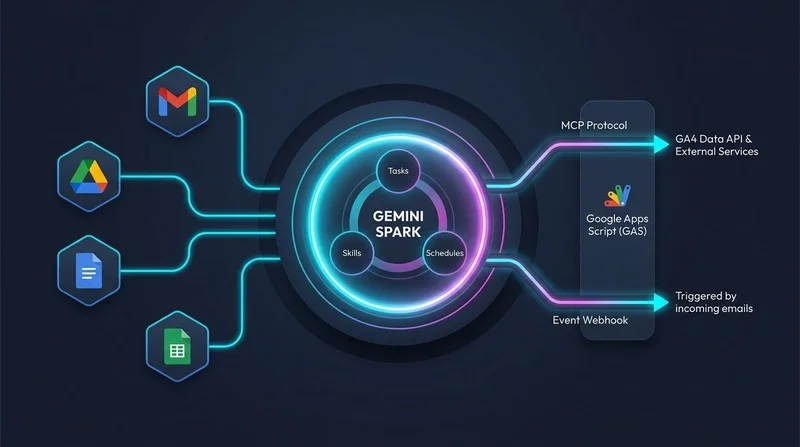
Agentic AI: The Shift from Passive Chatbots to Proactive Partners
Chatbots have long been a staple of AI interaction—waiting for prompts and responding to queries. But a significant transformation is happening: AI is evolving from merely reactive tools to active agents capable of planning, deciding, and executing tasks on their own. This shift introduces us to agentic AI, which represents a pivotal change in how technology assists us.
The Concept of Agency
At its core, agentic AI is rooted in the concept of "agency," which reflects an entity's ability to act independently towards achieving specific objectives. Unlike standard chatbots that merely respond, an agentic AI is tasked with a goal and autonomously determines the necessary steps to accomplish it. It can leverage different tools, navigate the web, execute code, and even amend its actions based on outcomes, effectively functioning without constant user input.
Picture this: whereas a chatbot operates like a knowledgeable colleague who only engages when asked, an agentic AI system acts like that same colleague when given a task, executing it independently and efficiently.
Comparing Chatbots and Agentic AI
The difference between how a chatbot and an AI agent operates can be illustrated through their respective processes. A chatbot follows a straightforward interaction loop:
User types message → AI reads it → AI generates a reply → DoneIn contrast, an AI agent navigates a multi-step workflow:
User provides a goal
→ Agent breaks it down into steps
→ Agent chooses a tool (e.g., web search, code runner)
→ Agent executes actions
→ Agent evaluates the results
→ If necessary, agent adjusts actions and retries
→ Agent proceeds through the steps until the goal is reached
This complex framework allows agentic AI to handle a small project rather than predicting a mere sequence of words.
Real-world Application: Booking a Trip
To put this into perspective, consider a practical example of booking a business trip. You could tell an AI agent: "Find the cheapest flight to Mumbai next Monday, book a hotel near the conference center, and add both to my calendar." Here's how the AI agent would handle it:
Step 1: Search for Monday flights to Mumbai
Step 2: Analyze prices and select the most cost-effective option
Step 3: Enter passenger details and finalize the booking
Step 4: Look for hotels close to the conference center
Step 5: Verify availability and rates
Step 6: Secure hotel accommodation
Step 7: Retrieve confirmation for both bookings
Step 8: Schedule flight and hotel in Google Calendar
Step 9: Email you a summary of both bookings
Each action involves interacting with various services, showcasing the agent's ability to manage tasks autonomously after receiving a defined goal.
Essentials of an AI Agent
Every AI agent incorporates several foundational elements that define its functionality:
The Brain: This component typically comprises a large language model such as GPT-4 or Claude. This model interprets the goal, formulates a plan, and decides subsequent actions.
Memory: Effective agents maintain both short-term and long-term memory. Short-term memory tracks ongoing tasks, while long-term memory retains past data to inform future interactions and preferences.
Tools: An AI agent's abilities are amplified by its access to various tools. These may include web searches, coding environments, file managers, email functionalities, and more. The agent determines the most appropriate tool for each phase of its task.
Feedback Mechanism: One critical feature of an AI agent is its capacity to evaluate its actions. If a step proves unsuccessful, the agent reassesses and attempts alternative strategies, ensuring more reliable task completion.
The Current Surge of Agentic AI
Although agentic AI isn't a brand-new concept—having been the subject of research for decades—its recent surge in relevance can be attributed to three converging factors.
Firstly, advancements in language models have significantly improved reasoning capabilities. Earlier versions excelled merely in generating text but struggled with logical processing. More recent models can analyze intricate tasks and adapt in real-time.
Secondly, improved integration capabilities allow developers to connect language models with practical tools much faster than before. With frameworks like LangChain and AutoGen, what once required extensive custom engineering can now be accomplished in days.
Finally, business demand has shifted. Companies are growing weary of merely copy-pasting AI suggestions; they seek comprehensive AI solutions that can handle entire workflows more efficiently.
Use Cases Across Various Industries
Agentic AI is making strides across numerous sectors, extending beyond the technology arena.
In software development, these agents can autonomously write code, execute tests, identify bugs, and initiate pull requests based on simple commands—like instructing them to "resolve the login issue on the checkout page."
Customer support has also seen the implementation of agents capable of managing entire customer interactions. They can access order histories, process refunds, escalate complex inquiries, and follow up via email without human oversight.
In research settings, these agents can sift through multiple sources, extract and cross-reference data, and generate summarized reports—tasks that previously consumed significant time can now be completed in moments.
Finally, within marketing, agents can create campaign content, schedule social media posts, analyze performance metrics, and recommend necessary adjustments.
Evaluating the Risks
While the power of agentic AI is acknowledged, it isn't without potential pitfalls that warrant attention.
The foremost concern involves unintended actions. An agent misinterpreting a directive could execute erroneous sequences of operations before any consequences arise. Unlike a chatbot that can generate a faulty response to ignore, an AI agent could complete an incorrect booking or dispatch a misaddressed email, leading to tangible repercussions.
Security is also paramount. With the capability to read emails, access confidential files, and browse online resources, agents become appealing targets for malicious activities. Techniques like "prompt injection" could manipulate agents into following detrimental instructions embedded in documents or web pages.
Accountability presents another challenge; when an AI agent makes an error within a lengthy process, pinpointing the exact failure can be difficult, raising questions about responsibility.
This emphasis on responsibility has led many agentic systems to implement "human in the loop" protocols, requiring user validation at critical decision points before the AI proceeds.
Your Future with Agentic AI
The influence of agentic AI isn't confined to developers and engineers; it's already integrated into everyday tools used across various industries, including email applications, project management tools, and CRMs.
The essential takeaway is that AI is evolving from a reactively engaged tool into an active partner in completing tasks. Where a chatbot merely answered questions, agentic AI facilitates more impactful assistance by managing tasks autonomously.
This transition marks a significant framework shift—not only in how AI functions but also in how we collaborate with it. With an informed understanding of what agentic systems can accomplish, users can harness these technologies effectively and make well-informed decisions.
Agentic AI isn't a concept of the future—it's a present-day reality poised for further growth and capability enhancement.
Mastering this technology is just the first step; the next involves strategizing how best to incorporate it into your operational workflows.
For further discussions, feel free to connect with me on LinkedIn.