Historic Horse Racing Machines Could Test Massachusetts’ Casino Model
A proposal caught between chambers
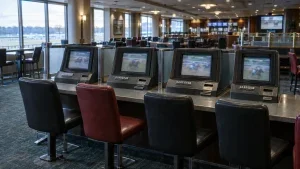
Massachusetts lawmakers are weighing a change that could put historic horse racing machines in simulcast centers, adding a new gambling product to a market built around a small number of licensed casinos. Wynn Resorts CEO Craig Billings says the proposal could expose casinos to new competition without requiring comparable financial and community commitments. That’s the dispute in plain terms: whether a new wagering venue should carry obligations similar to those already attached to casino licenses.
The House approved an amendment to an economic development bill that would allow the machines at Suffolk Downs and Raynham Park. The proposal hasn’t become law, and the Senate’s position remains unsettled. Its version omitted authorization for historic horse racing, while rejecting a separate amendment that would have expressly prohibited it, according to the Boston Herald. Lawmakers were still negotiating the provision, leaving the industry to assess a possibility rather than a settled policy.
That legislative ambiguity matters. Leaving a product out of one version of a bill doesn’t necessarily settle whether it can return in negotiations, while rejecting an explicit ban also leaves room for debate. The immediate question is whether the final bill permits the machines; the larger one is how Massachusetts will judge new gambling products against the commitments it has already demanded.
A new product, different obligations
Historic horse racing terminals present completed races for customers to wager on. Billings argues that they’d compete for casino customers while operating under different licensing costs, tax duties, capital requirements, community commitments and regulatory oversight. The machines could therefore enter the same broad market for gambling spending, but under terms that Wynn says aren’t equivalent to those governing casinos.
That distinction goes to the heart of the state’s casino framework. Massachusetts authorized three resort casinos and one slots facility in exchange for private investment, employment, tax revenue and payments to host communities. Billings wrote in The Boston Globe that adding operators without similar obligations could weaken that arrangement. The argument isn’t simply that casinos face competition; it’s that the state may be changing the terms of competition after building a system around a particular exchange of investment for public benefits.
Those commitments are part of the business model, not an incidental cost. A casino’s tax payments and local contributions connect gambling revenue to public budgets and host communities, while its investment and employment form part of the case for granting a license. If another product can draw from the same pool of customers without equivalent duties, policymakers must decide whether the existing framework still holds together. Billings has a clear interest in that question, but the underlying policy tension is real.
The state has already added live sports betting and online lottery sales, and lawmakers are considering online casino legislation. Billings’ concern is that each additional channel could divide customer demand and put pressure on revenue that supports public taxes, local payments, casino jobs and future investment. That’s a possibility, not a demonstrated outcome in the figures cited here: the article doesn’t quantify how much historic horse racing would shift spending from casinos, or whether it would attract customers who otherwise wouldn’t gamble.
The existing casinos generated about $101.9 million in gross gaming revenue in August, CDC GamingView reported. Since the facilities opened, Massachusetts has collected roughly $2.53 billion in casino taxes and assessments. Plainridge Park Casino pays a 49% tax on gross gaming revenue; the resort casinos, Encore Boston Harbor and MGM Springfield, pay 25%. Those numbers show why the debate centers on more than the amount wagered: different products and license types can produce different public returns.
The numbers here are underwhelming as evidence for predicting the effect of a new product. They describe casino revenue and tax contributions, but don’t establish how a new venue would change either. The comparison can frame the stakes; it can’t, by itself, settle the case for or against authorization.
Encore’s economics sharpen the debate
Billings tied the policy question to a labor dispute at Encore Boston Harbor. About 1,300 Teamsters and Unite Here members went on strike September 4 after their contract expired August 31. He said Encore’s labor costs had climbed nearly 37% in four years, while revenue increased by less than 2%, and described a sustainable labor agreement as part of adjusting to a changing market. Those figures put pressure on the casino’s operating economics at the center of his argument, though they don’t establish that historic horse racing would be the cause of that pressure.
Here’s the thing: the labor dispute and the proposed machines are connected in Billings’ case through the question of how much revenue casinos can count on while meeting their obligations. A strike, rising labor costs and competition from new gambling products are distinct issues, but they all affect the property’s ability to fund operations and commitments. And yet, the article gives no detail about the negotiations’ terms or the workers’ account of the dispute, so the economic case is presented mainly through management’s numbers.
Wynn invested $2.6 billion in Encore, which opened in 2019. Billings said the property has produced more than $1.1 billion in state tax revenue, along with $1.3 billion in employee compensation and $370 million in community payments. Those figures frame the casino’s operating case around both customer demand and the obligations attached to its license. They also explain why Wynn is emphasizing public contributions: the company is arguing that those payments should count when lawmakers decide whether another gambling operator should enter the market.
(And this is the part most people overlook.) A license can define a casino’s obligations for years, while new products can change the competitive conditions around it. The policy question is whether lawmakers want the same public goals—tax revenue, jobs and local payments—to apply across the expanding market, and how they’d account for differences between operators.
What the decision could signal
The negotiations will decide whether historic horse racing machines enter the final economic development bill. For Massachusetts, the choice tests how far the state can expand gambling products while maintaining the obligations that underpin its casino model. If you’re working in this space, the practical signal will be the terms lawmakers attach to any authorization: those could determine whether the machines compete within the existing framework or introduce a different set of expectations.
This is more significant than it looks because the debate is also about precedent. Authorizing a new channel while leaving its tax, licensing and community obligations distinct could influence how future proposals are judged. That doesn’t mean the machines will reduce casino revenue, nor does the source establish what their public returns would be. It means lawmakers are being asked to weigh potential competition against a record of commitments from current licensees.
There’s a simpler question beneath the accounting. What does Massachusetts expect gambling businesses to contribute in return for access to customers? The answer will shape how the state evaluates historic horse racing alongside sports betting, online lottery sales and any online casino proposal. The decision ahead. And its terms will matter as much as the yes or no.
The post Historic Horse Racing Machines Test Massachusetts Casino Model appeared first on ReadWrite.