TAG-193's Espionage Focus: Unpacking Regional Targets and Motives
Introducing the Threat Landscape
In the current digital age, cyber-espionage has become a significant concern for nations and organizations alike. Groups like TAG-193, also referred to as Silent Lynx, pose a unique challenge with their targeted efforts. The targeted espionage activities highlight not just the sophistication of such groups, but also their strategic interests, which often align with the geopolitical landscape.
Cyber-espionage isn’t merely about stealing sensitive information; it's about gaining an upper hand in international negotiations and understanding the nuances of regional stability. Governments worldwide are increasingly recognizing that their digital infrastructure is just as vulnerable as their physical assets. In this context, understanding the methodologies and motivations that drive groups like TAG-193 is paramount.
Targeted Espionage Activities
Recent investigations by Cisco Talos and Recorded Future's Insikt Group shed light on the persistent cyber-espionage efforts of TAG-193, known in some circles as Silent Lynx. This group focuses on governmental agencies within Central Asia and the Commonwealth of Independent States (CIS), reflecting a dual interest in both economic strategies and environmental policies.
The revelation of such focused threats is troubling. It underscores a trend where state-sponsored actors are increasingly zeroing in on specific sectors that influence national interests. By targeting these areas, TAG-193 isn't just mining for information; they're seeking strategic advantages that can shape priorities and policies across the region.
Strategic Government Institutions
TAG-193's efforts are particularly directed at government institutions that oversee diplomacy, agriculture, economic development, and environmental management. The intelligence gleaned from these sectors is essential for shaping negotiations and understanding regional security dynamics. Given the interconnected nature of Central Asia's resources, such insights are paramount.
It's important to consider why these sectors are appealing targets for cyber-espionage. Diplomacy influences international relationships, agriculture shapes food security, and economic development drives growth. Environmental management is increasingly relevant as governments grapple with climate change impacts. By getting a peek into how these institutions operate, groups like TAG-193 can effectively influence key decision-making processes.
Evolving Techniques and Insights
Recent data have unveiled insights into TAG-193's methodologies, including their malware and operational tactics. Potential links to Kazakhstan suggest a nuanced origin story, yet the complete background of the group remains unclear. This highlights how resource management and diplomatic efforts are key motivators behind their cyber activities.
What’s particularly striking is how TAG-193’s techniques have evolved over time. Similar systems typically depend on phishing schemes, advanced malware, and social engineering tactics that exploit human vulnerabilities. These tactics serve to both infiltrate systems and maintain long-term access, allowing for ongoing intelligence collection. There's a clear indication that groups like TAG-193 are not static; their ability to innovate in the face of increased countermeasures suggests a level of sophistication that shouldn't be overlooked.
(And this is the part most people overlook) There’s often an assumption that cyber-espionage is solely about technology. While cyber tools are critical, one cannot dismiss the importance of understanding the cultural and operational contexts in which this espionage takes place. TAG-193 is evidently aware of its target environment, and it utilizes knowledge of local societal norms to maximize effectiveness.
The Broader Implications of TAG-193's Activities
The activities of groups like TAG-193 have wider implications beyond immediate cybersecurity concerns. As their operations deepen, they can foster mistrust between nations, exacerbating existing tensions in a region already fraught with historical grievances. When nations recognize that they're being targeted, it can lead to changes in policy, defensive posturing, and a general increase in tension.
For policymakers, this reality presents a dual challenge: not only do they have to bolster their cybersecurity measures, but they also need to engage in diplomatic strategies that mitigate the fallout from potential data breaches. That said, cybersecurity isn’t just a job for IT departments. It requires input at the highest levels of government.
Future Outlook
As cyber-espionage continues to evolve, one has to wonder how governments and organizations will adapt. If you're working in this space, one aspect to keep an eye on is the growing collaboration between nations to combat these shared threats. While traditionally, nations have operated in silos when it comes to intelligence, the tacit understanding that cybersecurity is a shared concern could lead to unprecedented levels of cooperation.
On a tactical level, an increased focus on detection and rapid response will be essential. While prevention remains a priority, the reality is that no system is impervious to infiltration. This acceptance will necessitate a mindset shift; organizations need to prepare for breaches as much as they aim to prevent them.
Ultimately, TAG-193’s activities signify a challenging path ahead for cybersecurity professionals and governmental agencies alike. As the interplay of economics, politics, and technology continue to evolve, the stakes will only get higher, demanding a proactive rather than reactive strategy to safeguard assets and information.
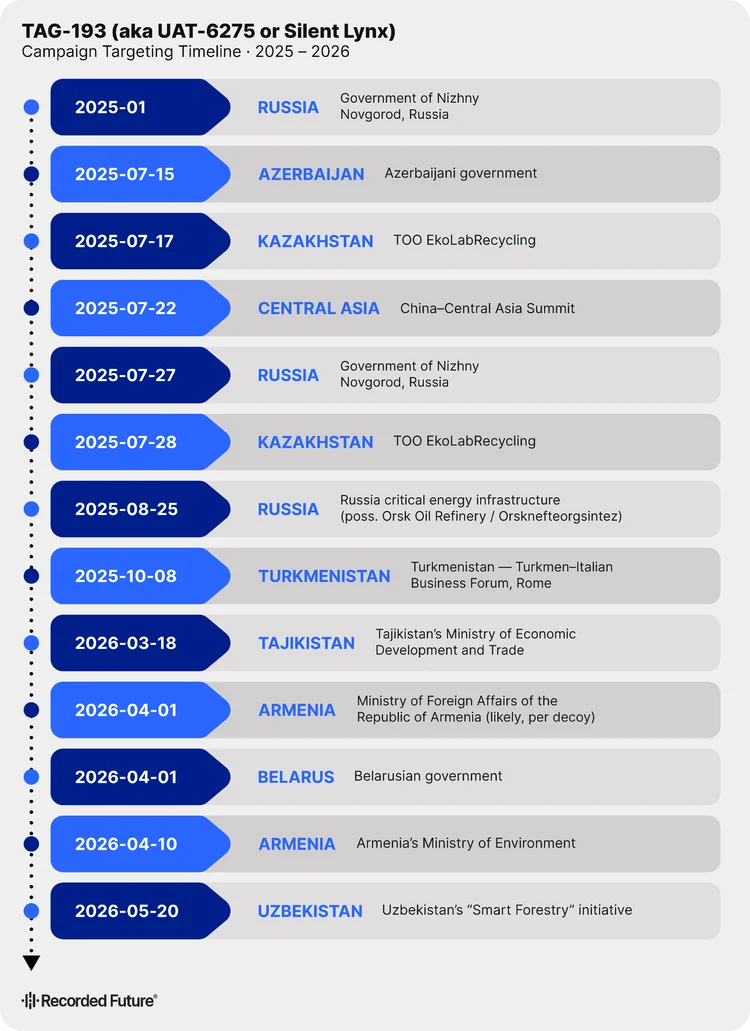
Figure 1: Timeline of TAG-193 campaigns