Reassessing Vulnerability Management in the Age of AI
Artificial intelligence (AI) is advancing vulnerability research and discovery capabilities, yet it hasn't changed the core mechanics of managing these vulnerabilities. What we are witnessing instead is an amplification of existing challenges for security teams: the prioritization of patches and managing remediation backlogs are becoming more pressing than ever.
As the pool of disclosed vulnerabilities expands, organizations that rely on outdated methods—manual prioritization, sluggish patch cycles, or legacy software—are at heightened operational and security risk. The timeline for evaluating which vulnerabilities require urgent attention is shrinking, making nimbleness crucial as the overall volume of threats escalates.
Navigating Varying Degrees of Risk
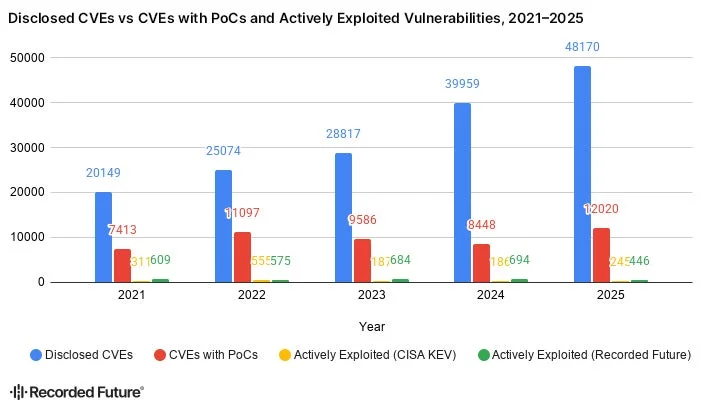
Not all vulnerabilities present a real-world threat; many software flaws are either difficult to exploit or not worth an attacker’s time. The noticeable influx of vulnerabilities has jumped from approximately 21,000 in 2021 to nearly 50,000 projected for 2025. This surge is influenced by improved disclosure avenues, increased bug bounty programs, and a more extensive software landscape.
However, only 446 vulnerabilities were confirmed as actively exploited in 2025, indicating a significant disparity between disclosed flaws and those that attackers are actively targeting. Attackers prioritize vulnerabilities that provide the best chance for exploitation, based on factors like reach, reliability, and potential impact. They aren’t chasing every flaw but are instead focusing on those that can yield the most benefits.
The attack window is shrinking: data from VulnCheck indicates that nearly 29% of vulnerabilities evaluated by the Cybersecurity and Infrastructure Security Agency (CISA) were exploited on the same day they were disclosed, highlighting an uptick in zero-day and n-day exploits. While defenders grapple with increased vulnerability reports, adversaries are increasingly turning to AI to expedite their workflows, complicating the situation further.
The Influence of AI on Vulnerability Management
Recent releases of AI models from notable organizations like Anthropic and OpenAI have raised eyebrows in the cybersecurity sector. Evaluations of these models, such as Anthropic's Mythos, have revealed promising enhancements in their capacity to simulate multi-step cyberattacks. Despite this attention, AI-assisted vulnerability discovery is not new; current advancements have built upon tools that assist in identifying vulnerabilities and facilitate exploit development.
As these models mature, they're shifting the dynamics of vulnerability reporting management in three significant ways:
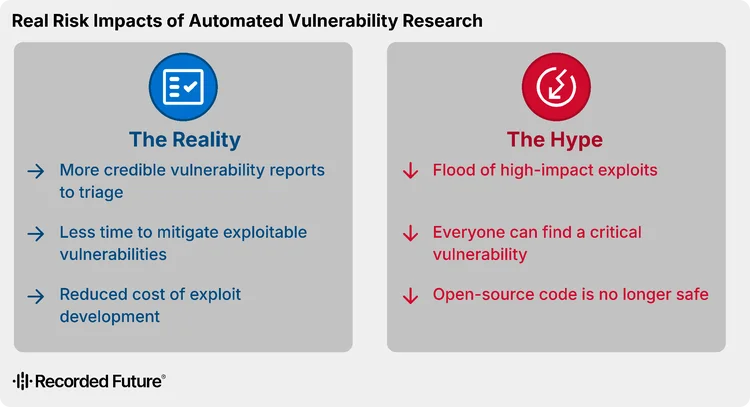
- More credible vulnerability reports: Advanced AI tools can provide greater context, assessing program behavior, validating vulnerabilities, and prioritizing which are most likely to be exploitable.
- Decreased time to mitigate: The speed of weaponization may drop from hours to minutes due to AI capabilities, reshaping the landscape of urgency for remediation efforts.
- Lower barriers to exploit creation: Emerging AI models help develop proof-of-concept codes and accelerate the iterative process through which skilled operators can produce viable exploits.
The Dilemma of Increased Reporting
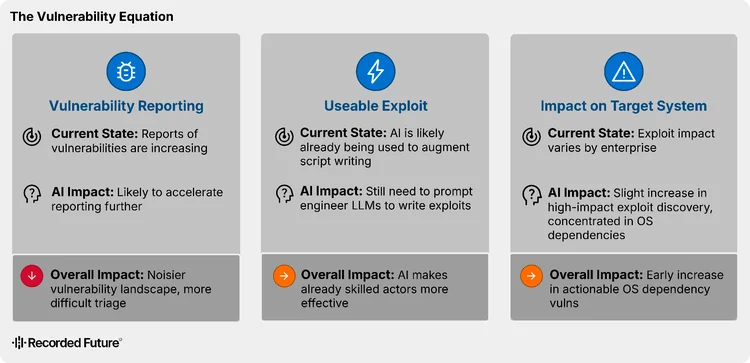
The integration of AI into vulnerability research is poised to significantly inflame the volume of reported vulnerabilities and proofs of concept. For example, Microsoft’s Patch Tuesday in April 2026 marked one of its largest releases on record, though it clarified that the increase was not solely attributable to AI discoveries. The pressing concern remains whether security teams can effectively process and prioritize the influx of vulnerabilities before attackers leverage them.
The rising tide of vulnerability submissions is overwhelming, already outpacing researchers’ capacity to evaluate risks comprehensively. A surge in plausible findings will translate into greater confusion for defenders trying to discern high-stake vulnerabilities from mere background noise.
Adapting to Time Constraints
As the landscape becomes more complex, defenders must adjust their strategies in response to vulnerable exploits. The time frame for addressing critical vulnerabilities is compressing, compelling teams to reassess the urgency of medium- or low-severity vulnerabilities that could be components of exploit chains.
The Noise of Information Overload
While the increase in reported findings presents both a challenge and an opportunity, it is also drowning out alerts for high-impact vulnerabilities that require immediate attention. Identifying the tiny percentage of critical issues becomes even more daunting as the volume of seemingly significant reports grows.
The scenario doesn’t imply that every newly disclosed vulnerability is destined for weaponization, nor are widespread, catastrophic events set to become the norm. Yet, even a slight uptick in exploitations raises the stakes for prioritization and responsiveness, especially for organizations already struggling with outdated processes.
Strategic Automation for Effective Defense
Organizations now face a pressing challenge: not every vulnerability will be exploited, but the decision-making window for prioritization is diminishing. It’s essential to distinguish between vulnerability discovery and exposure management as interconnected yet separate aspects of security protocols. While AI might increase the volume of reported findings, defenders must focus on determining which vulnerabilities pose actual threats demanding swift action.
In this evolving scenario, leveraging AI for vulnerability discovery, prioritization, and remediation efforts will become synonymous with success. Here are five strategic actions organizations can undertake to fortify their defenses:
1. Streamline Vulnerability Prioritization
Transitioning from traditional CVSS scoring to a more dynamic, exploitation risk score will empower teams to address the deluge of AI-generated vulnerabilities. Implement automated scanning and threat hunting to swiftly detect exploitation attempts, especially within publicly exposed systems.
2. Accelerate Patching Cycles
As the pace of exploitation changes from days to hours, accelerating patch management processes is critical. Automated remediation and fallback controls will likely become necessary to stay ahead in this adversarial landscape.
3. Phase Out Legacy Software
With AI-driven insights, legacy and unsupported software systems may become increasingly difficult to secure. Without consistent upgrades and proper isolation, the risks associated with dated systems only grow.
4. Implement Security Early in Development
Integrating automated security testing into the development lifecycle enables issues to be resolved at the source, minimizing future remediation tasks.
5. Prepare for High-Impact Vulnerabilities
Strategically develop response playbooks for rapidly-occurring, high-impact vulnerabilities, ensuring that mitigative measures like segmentation and access restrictions are part of the strategic planning.