New AI Infrastructure Indicator Lists Enhance Enterprise Security Monitoring
Recorded Future recently unveiled its AI Infrastructure Indicator Lists, a vital resource for security teams aiming to track and manage AI-related network activities. These curated datasets are available at no cost to customers with a Cyber Operations license, providing significant value in today's environment of increasing AI adoption.
As AI tools become deeply embedded in corporate ecosystems, organizations face challenges related to unauthorized usage—often referred to as shadow AI. This trend has led to data leaks and system behaviors that bypass traditional safeguards, leaving potential vulnerabilities unaddressed. Shadow AI can manifest in various ways, from unapproved applications to processes that run outside the purview of the IT department, making detection and control particularly challenging.
Understanding AI Security Accumulation
The presence of multiple AI applications within businesses contributes to what can be described as security debt, a term denoting unchecked risks piling up faster than they can be managed. In many organizations, management's focus is predominantly on pressing threats, while the subtler, hidden dangers linked to AI technologies tend to escape scrutiny. This blind spot is not trivial; it often leads to increasing operational vulnerabilities. Recorded observations from last year show an alarming trend: organizations are not only identifying threats but also accumulating governance gaps, and this accumulation is happening at an unprecedented rate.
Take agentic AI, for instance, which is gaining traction rapidly. These systems function across interconnected environments, inadvertently opening doors for malicious actors to exploit systemic weaknesses. Picture this scenario: an employee discovers a viral AI assistant on social media, finds it fascinating, and installs it without a thought for procurement processes or security reviews. Such actions underscore genuine security concerns, as seen in the case of OpenClaw, an open-source AI tool that gained traction rapidly—essentially thriving without adequate organizational oversight. This kind of behavior points out a serious disconnect between technological capability and corporate governance.
Looking ahead, research suggests that by 2027, a staggering 75% of employees will likely engage with technology outside the parameters of IT governance. What would this mean for organizations? As these autonomous agents proliferate, it's increasingly necessary for security teams to develop strategies for managing unauthorized AI tools—establishing visibility and control akin to what they apply to human users. If you're working in this space, the implications are clear: there's an urgent need for adaptive security frameworks that can encompass these newly emergent technologies.
What the Indicator Lists Offer
Unlike conventional threat feeds that present data in overwhelming volumes, Recorded Future’s AI Infrastructure Indicator Lists offer a more user-friendly experience. These lists are curated and updated regularly, clearly delineating what AI resources are being utilized—by employees or adversaries alike. This approach is more tailored compared to standard industry feeds that risk saturating security teams with excessive and unwieldy data, leading to analysis paralysis.
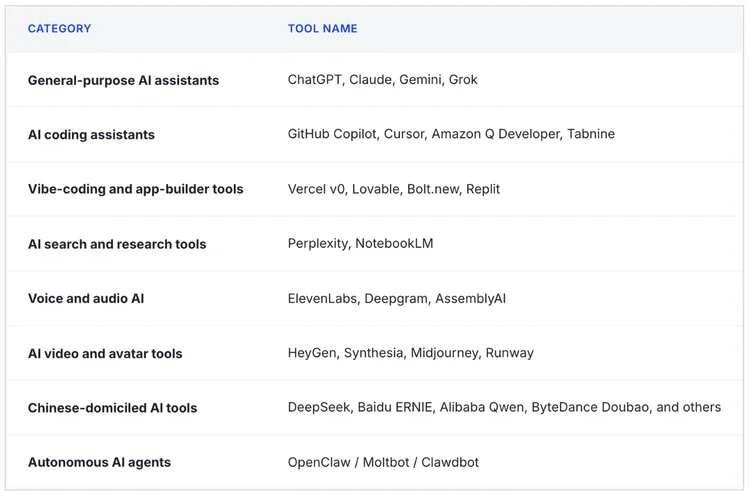
The sets include essential details such as IP addresses, CIDR ranges, and domain names, each with associated Risk Scores and commentary to aid in assessment. Recorded Future has structured these indicators into two primary categories: a standard AI infrastructure list and a specific list for Chinese AI technologies. This bifurcation is significant, considering geopolitical concerns surrounding cybersecurity. The lists encompass a diverse array of tools, from generic AI assistants and coding helpers to voice, audio, and video AI applications, alongside Chinese-based offerings and fully autonomous agents. This level of granularity allows organizations to make more informed decisions about which technologies to absorb into their operations and which ones to approach with caution.
The Road Ahead: Implications and Future Outlook
The introduction of AI Infrastructure Indicator Lists by Recorded Future could signal a shift in how organizations think about AI governance. This isn't just about tracking; it's about redefining operational security in the context of AI. More than just another dataset, these lists might encourage firms to embrace a proactive, rather than reactive, stance toward AI security.
Consider the long-term ramifications. If organizations effectively implement these resources, they could find themselves better positioned to mitigate risks associated with shadow AI, thereby preventing data breaches and unexpected system behavior. The pressure is on security teams not just to comply but to engage more deeply with the technologies fueling their operations. As this sphere evolves, ongoing scrutiny over governance practices around AI tools will become increasingly vital. Those who fail to adapt might find themselves struggling with security debt that compounds exponentially.
And this is the part most people overlook: while technology continues to leap forward, the human element—awareness, training, and adaptability—remains paramount. Companies would do well to invest in a security culture where employee engagement about AI usage and potential risks is routine. This human layer might be their best defense yet. What this means for you is that staying informed isn't just good practice—it's essential for survival in a high-stakes cybersecurity environment.


